產品資訊
產品資訊
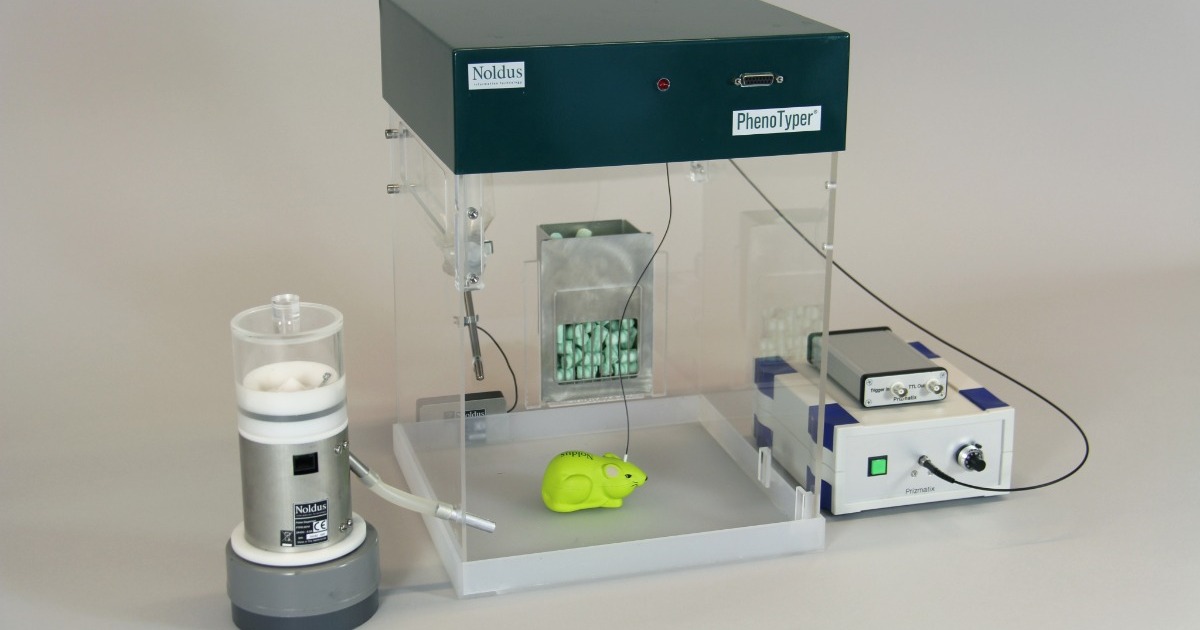
老鼠行為活動觀測箱 PhenoTyper
產品型號:
廠牌名稱: Noldus
老鼠行為活動觀測箱PhenoTyper 是一個進行實驗鼠行為觀察實驗的理想硬體設備,每一個箱體都包含了裝有日夜兩用光源以及攝影機的上蓋,以及下半部的觀測箱主體,箱體本身還可以再安裝燈光或聲音等刺激器。
▪ 光源與攝影機皆已優化,可錄製理想的實驗影像
▪ 可套用在多種行為實驗上
▪ 可搭配其他硬體設備與軌跡追蹤軟體使用


產品特點
Sizing options and features
PhenoTyper is available in two standard sizes: the PhenoTyper 3000 has a floor area of 30cm x 30cm (12"x 12") and the PhenoTyper 4500 has a floor area of 45cm x 45cm (18" x 18"). Custom sizing is also possible, for example a model of 90cm x 90cm (36" x 36") has been used in studies.
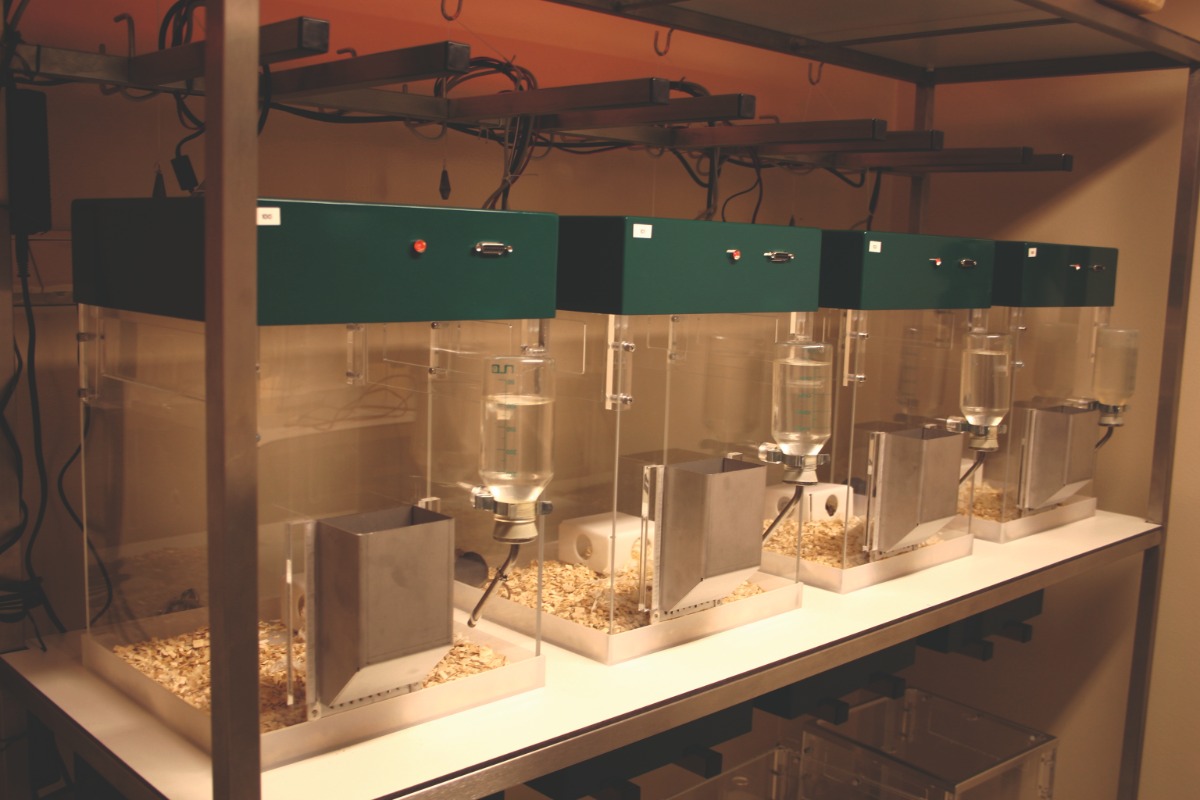
The instrumented top unit contains an infrared sensitive camera with three arrays of infrared LED lights. You can adjust light conditions experimentally to e.g. create a day/night cycle, use the single tone for operant conditioning tests, or use the white spot light for approach-avoidance behavior testing.
PhenoTyper and social interaction
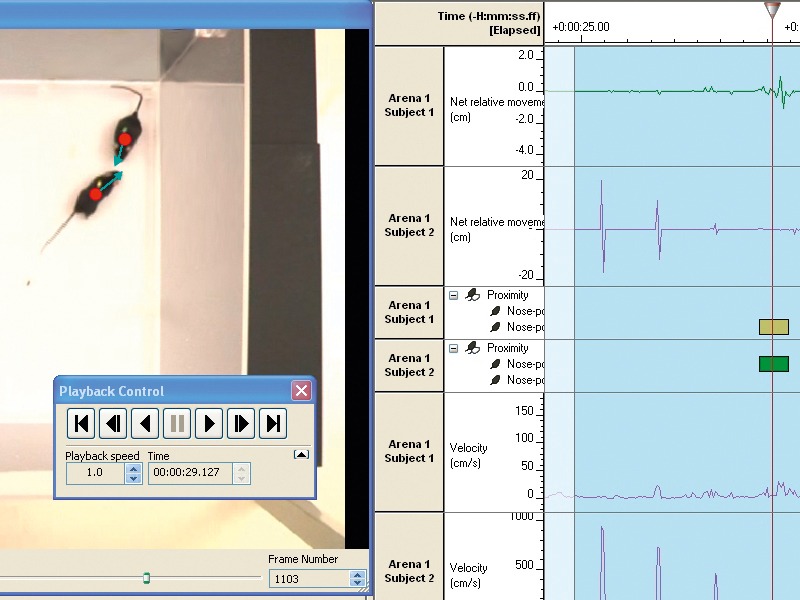
PhenoTyper is perfect to study social interaction in great detail. You can even prompt stimuli responding to animal behavior. For example, release a food reward when animals are in the same area together, or when they both press a lever. This protocol can easily be automated with EthoVision XT.
PhenoTyper and operant conditioning
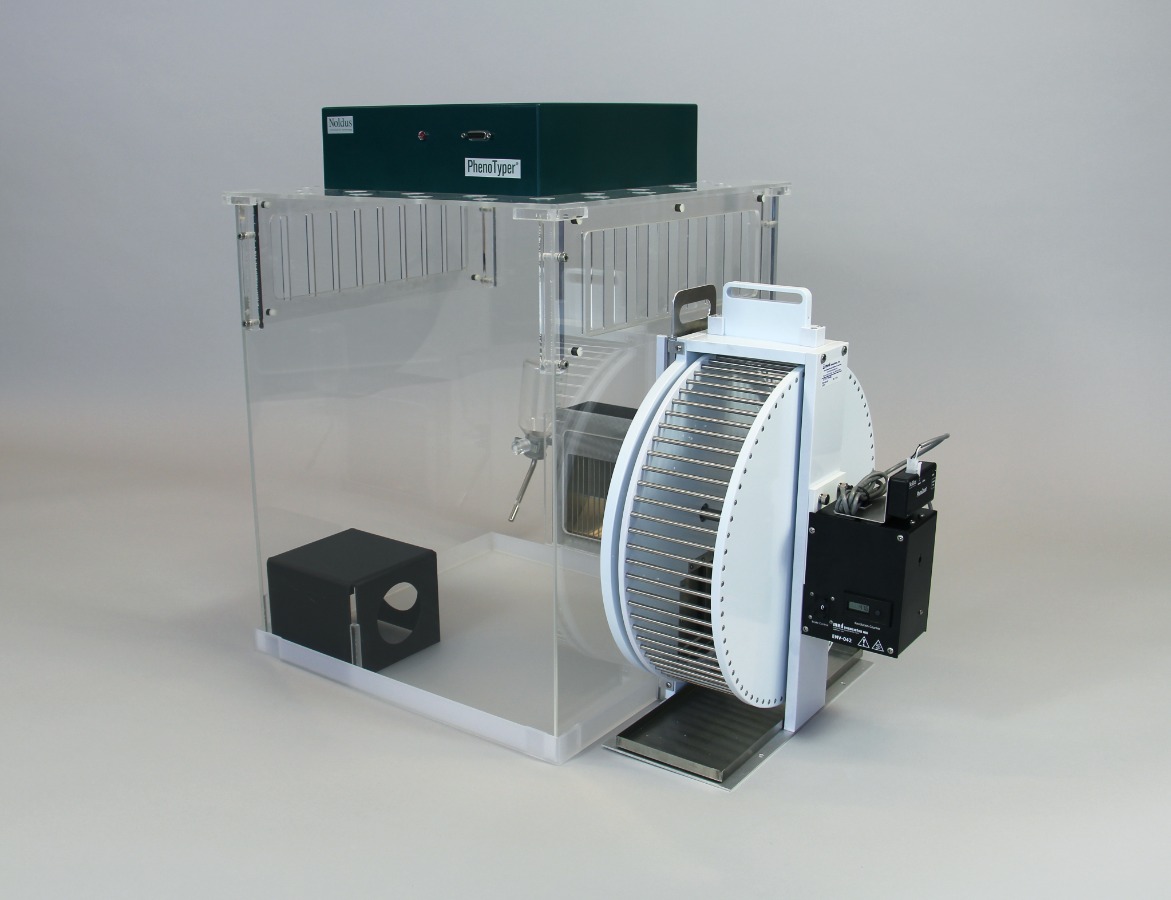
PhenoTyper is ideal for operant conditioning tests: in combination with EthoVision XT, procotols are easily automated. For example, switch on a light when your mouse enters a zone, give the rat a food reward after a lever press, or switch on the brake of the Activity wheel after a number of rotations. There are a large number of operant modules that can be connected to the PhenoTyper cage, for example to automatically apply an air puff or give a food reward.
PhenoTyper and anxiety testing
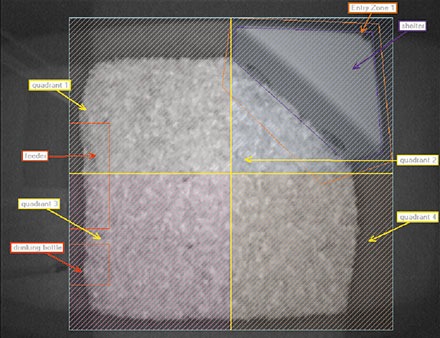
You can use mild aversive stimuli for anxiety testing in PhenoTyper. You can, for example, automatically switch on a light when your animal enters a certain zone or illuminate the food hopper in the dark period when the animal has been eating or drinking for a certain time. But you can also equip PhenoTyper with an illuminated shelter that can be controlled with EthoVision XT’s Trial & Hardware Control Module. This way a light can switch on automatically when the animal enters the shelter, or chooses a specific shelter entrance. You can extend your setup with other TTL-based hardware. This way you can adjust your anxiety tests entirely to your needs.
產品規格
- PhenoTyper 3000 (standard size) - floor size 30cm x 30cm (11.8" x 11.8"), wall height 35cm (13.8")
- PhenoTyper 4500 (standard size) - floor size 45cm x 45cm (17.7" x 17.7"), wall height 55cm (21.7")
- PhenoTyper 9000 (custom size) - 90cm x 90cm (35.4" x 35.4"), wall height 100cm (39.4")
- Top unit, 30cm x 30cm (11.8" x 11.8"), height 9cm (3.5")
- Video output - CCIR black/white Vpp-75 Ohm (PAL) or EIA black/white Vpp-75 Ohm (NTSC)
- Infrared lighting - 3 integrated IR arrays through diffuser
- Audio stimulus - Frequency ~2300 Hz; level ~70 dB
- House light - 590 nm
- White spotlight - 5500ºK color temperature; level 0-1000 lux
- Power supply - 24 VDC-15W
應用領域
Recent publications
- Mul, J.D.; Boxtel, R. van; Bergen, D.J.M.; Brans, M.A.D.; Brakke, J.H.; Toonen, P.W.; Garner, K.M.; Adan, R.A.H.; Cuppen, E. (2011). Melanocortin Receptior 4 Deficiency Affects body weight regulation, grooming behavior, and substrate preference in the rat. Obesity, doi: 10.1038/oby.2011.81.
- Olivier, J.D.A.; Valles, A.; Heesch, van, F.: Afrasiab-Middelman, A.; Roelofs, J.P.M.; Jonkers, M.; Peters, E.J.; Korte-Bouws, G.A.H.; Dederen, J.P.; Kiliaan, A.J.; Martens, G.J.; Schubert, D.; Homberg, J.R. (2011). Fluoxetine administration to pregnant rats increases anxiety-related behavior in the offspring. Psychopharmacology, doi10.1007/s00213-011-2299-z.
- Paradiso, B.; Zucchini, S.; Su, T.; Bovolenta, R.; Berto, E.; Marconi, P.; Marzola, A.; Navarro Mora, G.; Fabene, P.F.; Simonato, M. (2011). Localized overexpression of FGF-2 and BDNF in hippocampus reduces mossy fiber sprouting and spontaneous seizures up to 4 weeks after pilocarpine-induced status epilepticus. Epilepsia, 52, 572-578.
- Schipper, P.; Nonkes, L.J.P.; Karel, P.; Kiliaan, A.J.; Homberg, J.R. (2011). Serotonin transporter genotype x construction stress interaction in rats. Behavioural Brain Research, 223, 169-175.
- Trent, S.; Dennehy, A.; Richardson, H.; Ojarikre, O.A.; Burgoyne, P.S.; Humby, T.; Davies, W. (2011). Steroid sulfatase-deficient mice exhibit endophenotypes relevant to attention deficit hyperactivity disorder. Psychoneuroendocrinology, doi:10.1016/j.psyneuen.2011.06.006.
- Valor, L.M.; Pulopulos, M.M.; Jimenez-Minchan, M.; Oliveras, R.; Lutz, B.; Barco, A. (2011). Ablation of CBP in Forebrain Principal Neurons causes modest memory and Transcriptional Defects and a dramatic reduction of Histone acetylation but does not affect cell viability. Journal of Neuroscience, 31, 1652-1663.
- Mooij-van Malsen, J.D. de: Vinkers, C.H.; Peterse, D.P.; Olivier, B.; Kas, M.J.H (2010). Cross-species behavioural genetics: A starting point for unravelling the Neurobiology of human psychiatric disorders. Neuro-Psychopharmacology & Biological Psychiatry, doi:10.1016/j.pnpbp.2010.10.003.
- Kang, J.; Kang, N.; Yu, Y.; Zhang, J.; Petersen, N.; Tian, G.F.; Nedergaard, M. (2010). Sulforhodamine 101 induces long-term potentiation of intrinsic excitability and synaptic efficacy in hippocampal ca1 pyramidal neuroons. Neuroscience, 169, 1601-1609.
- Moscardo, E.; Rostello, C. (2010). An integrated system for video and telemetric electroencephalographic recording to measure behavioural and physiological parameters. Journal of Pharmacological and Toxicological Methods, 62, 64-71.
- Silverman, J.L.; Yang, M.; Lord, C.; Crawley, J.N. (2010). Behavioural phenotyping assays for mouse models of autism. Nature reviews neuroscience, 11, 490-502.
- Silverman, J.L.; Turner, S.M.; Barkan, C.L.; Tolu, S.S.; Saxena, R.; Hung, A.Y.; Sheng, M.; Crawley, J.N. (2010). Sociability and motor functions in Shank1 mutant mice. Brain research, 1380, 120-137.
- Kalueff, A.V.; Olivier, J.D.A.; Nonkes, L.J.P.; Homberg, J.R. (2010). Conserved role for the serotonin transporter gene in rat and mouse neurobehavioral endophenotypes. Neuroscience and Biobehavioral Reviews, 34, 373-386.
- Balemans, M.C.M.; Huibers, M.M.H.; Eikelenboom, N.W.D.; Kuipers, A.J.; Summeren, R.C.J. van; Pijpers, M.M.C.A.; Tachibana, M.; Shinkai, Y.; Bokhoven, H. van; Van der Zee, C.E.E.M. (2009). Reduced exploration, increased anxiety, and altered social behavior: Autistic-like features of euchromatin histone methyltransferase 1 heterozygous knockout mice. Behaviour Brain Research, article in press, doi: 10.1016/j.bbr.2009.11.008.
- Dalm, S.; Visser, L. de; Spruijt, B.M.; Oitzl, M.S. (2009). Repeated rat exposure inhibits the circadian activity patterns of C57BL/6J mice in the home cage. Behavioural Brain Research, 196, 84-92.
- Lukkes, J.L.; Mokin, M.V.; Scholl, J.L.; Forster, G.L. (2009). Adult rats exposed to early-life social isolation exhibit increased anxiety and conditioned fear behavior, and altered hormonal stress responses. Hormones and Behavior, 55, 248-256.
- Mooij-van Malsen, J.G. de; Lith, H.A. van; Oppelaar, H.; Hendriks, J.; Wit, M. de; Kostrzewa, E.; Breen, G.; Collier, D.A.; Olivier, B.; Kas, M.J. (2009). Interspecies Trait Genetics Reveals Association of Adcy8 with Mouse Avoidance Behavior and a Human Mood Disorder. Biological Psychiatry, article in press, doi: 10.1016/j.biopsych.2009.06.016.
- Pham, J.; Cabrera, S.M.; Sanchis-Segura, C.; Wood, M.A. (2009). Automated scoring of fear-related behavior using EthoVision software. Journal of Neuroscience Methods, 178, 323-326.
- Ryan, B.C.; Young, N.B.; Crawley, J.N.; Bodfish, J.W.; Moy, S.S. (2009). Social deficits, stereotypy and early emergence of repetitive behavior in the C58/J inbred mouse strain. Behavioural Brain Research, article in press, doi:10.1016/j.bbr.2009.11.031.
- Yang, M.; Clarke, A.M.; Crawley, J.N. (2009). Postnatal lesion evidence against a primary role for the corpus callosum in mouse sociability. European Journal of Neuroscience, 29, 1663-1677.
- Smits, S.M.; Noorlander, C.W.; Kas, M.J.H.; Ramakers, G.M.J.; Smidt, M.P. (2008). Alterations in serotonin signalling are involved in the hyperactivity of Pitx3-deficient mice. European Journal of Neuroscience, 27, 388-395.